Tours
Private City Tour with Arlington Cemetery
Available every day
Starting from 675.00 USD for 2 adults

Big ideas, shared history and room to reflect.
Tours
Available every day
Starting from 675.00 USD for 2 adults

Tours
Available on Thursday, Friday, Saturday, Tuesday and Wednesday
Starting from 783.00 USD for 2 adults

Tours
Available every day
Starting from 675.00 USD for 2 adults

Tours
Available every day
Starting from 675.00 USD for 2 adults



Tours
Available every day
Starting from 93.75 USD per person


Transfers
Available every day
Starting from 250.00 USD for 2 adults

Transfers
Available every day
Starting from 162.50 USD for 2 adults

Transfers
Available every day
Starting from 200.00 USD for 2 adults

Transfers
Available every day
Starting from 250.00 USD for 2 adults

Transfers
Available every day
Starting from 200.00 USD for 2 adults

Transfers
Available every day
Starting from 162.50 USD for 2 adults

Transfers
Available every day
Starting from 81.25 USD per person

Transfers
Available every day
Starting from 43.75 USD per person

Transfers
Available every day
Starting from 68.75 USD per person

Transfers
Available every day
Starting from 81.25 USD per person

Transfers
Available every day
Starting from 43.75 USD per person

Transfers
Available every day
Starting from 68.75 USD per person

Activities
Available on Friday, Saturday, Sunday, Monday, Tuesday and Wednesday
Starting from 30.00 USD per person
No services match your search.
The OpenTours city guide
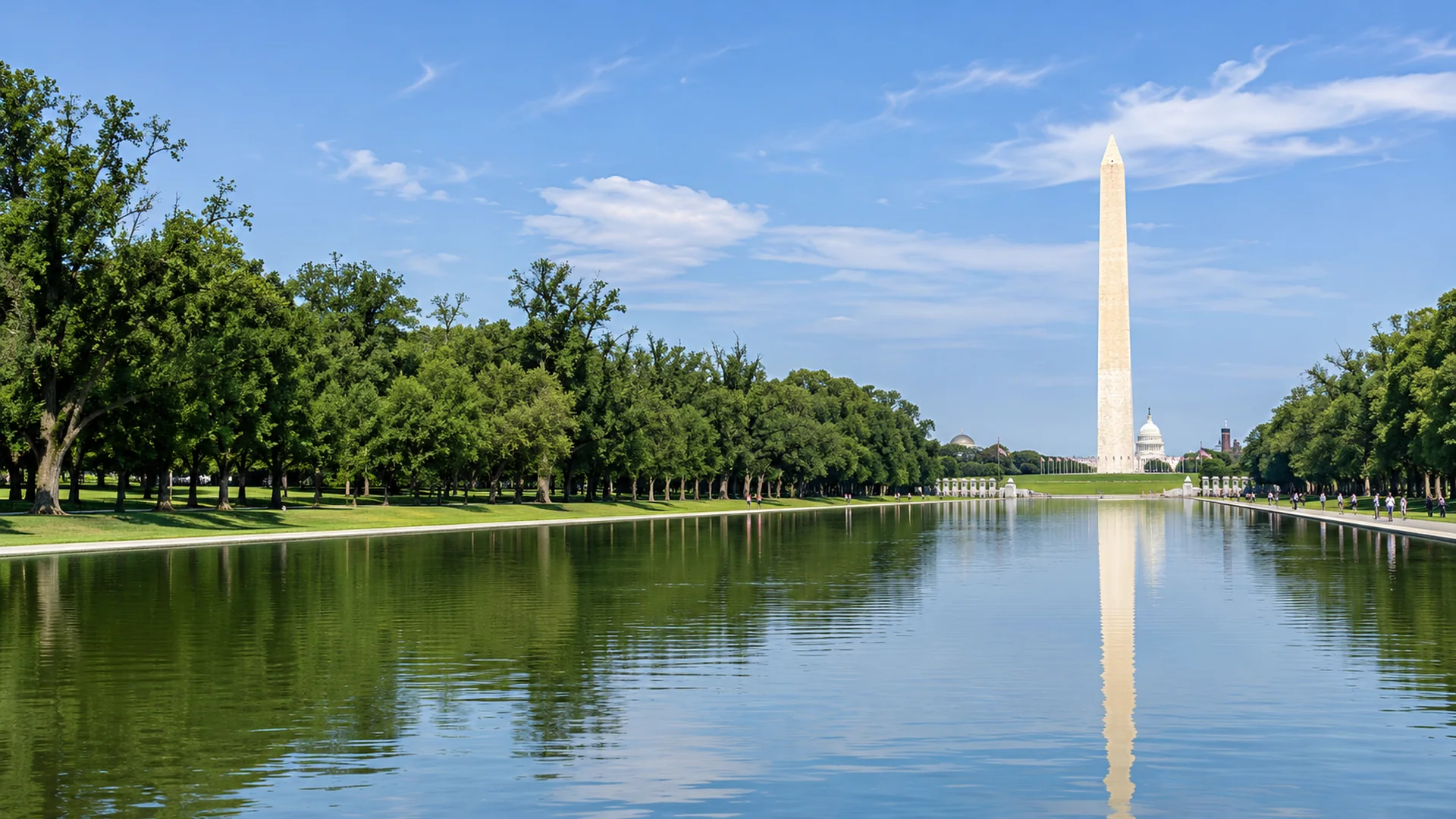
Washington, DC invites you to move between the monumental and the personal: a broad view across the National Mall, a museum object that holds your attention, a neighborhood street away from the ceremonial avenues. The capital rewards curiosity more than speed. Choose the histories and collections that matter to you, leave time for the distances between them, and make room for the city that surrounds the national landmarks you visit.
The National Mall is an obvious starting point, but it should not become a race from one end to the other. Group memorials by location and choose museums by subject, giving each enough time to be worthwhile. A morning inside a collection and an afternoon outdoors can provide a useful balance. Check your actual walking route, because the generous spaces can make landmarks appear closer than they are.
Add at least one neighborhood to understand a different side of the capital. Georgetown's streets and waterfront, Capitol Hill's residential setting or another area that interests you can provide a more local scale. Washington also works well for travelers with distinct interests: art, science, politics, design and American history can each shape a very different visit. Let those interests guide your choices rather than trying to cover everything.
Behind the landmarks
The Residence Act of July 16, 1790 selected a location along the Potomac River for the permanent seat of the United States government. Philadelphia served as the temporary capital while the new seat was prepared, and the federal government moved to Washington in 1800. This planned role helps explain the city's broad avenues and the relationship between its major civic landmarks.
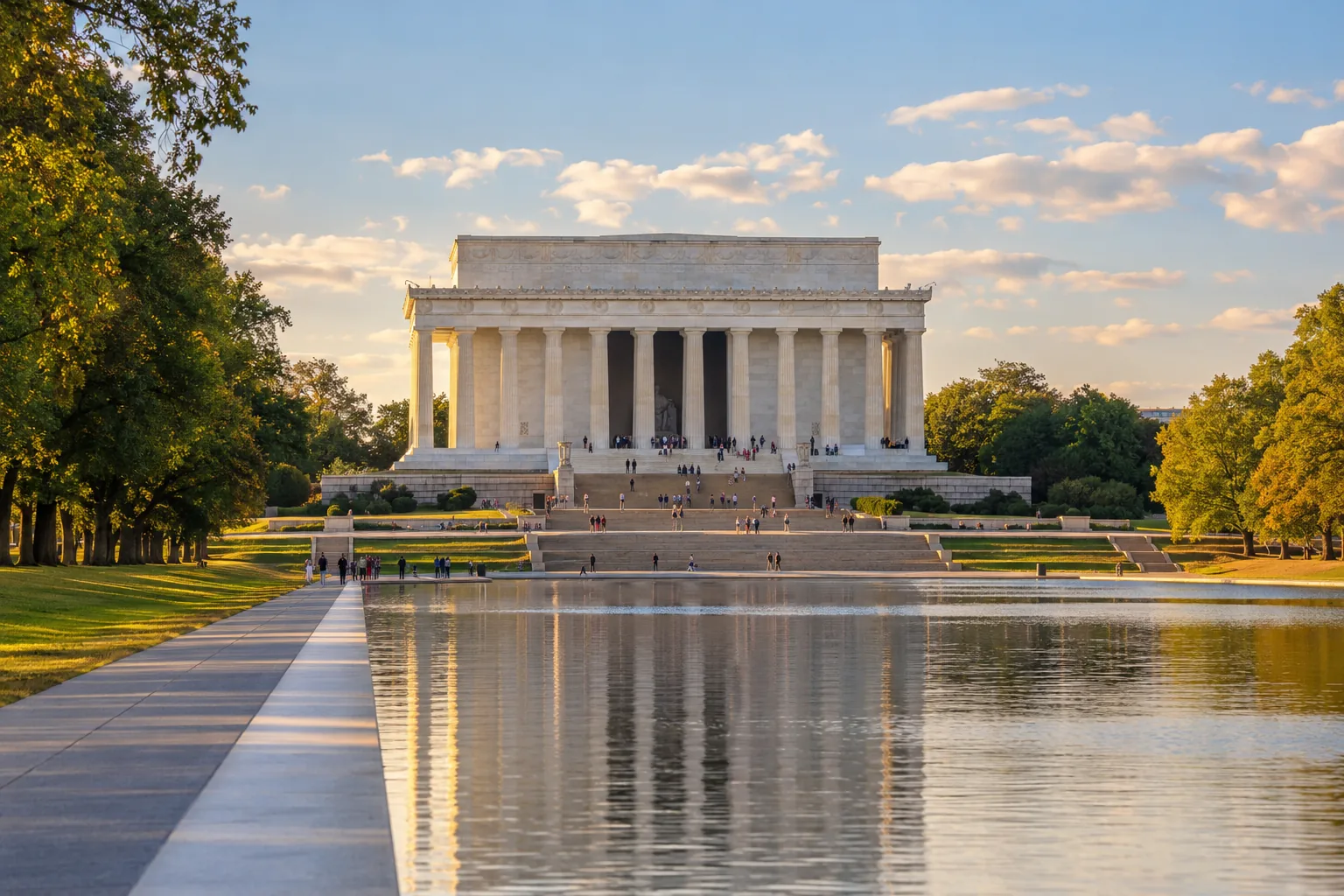
The National Mall became a central landscape of national memory, with monuments and memorials that invite visitors to consider different chapters of American history. These places are most rewarding when their stories have time to settle. Our suggestion is to choose a small group of memorials, read their inscriptions and interpretation, and leave space for reflection before moving on to the next part of the city.
Historical sources: Library of Congress: The Residence Act United States Senate: Congressional meeting places in Philadelphia National Park Service: National Mall and Memorial Parks
Start exploring
Plan a manageable section of this broad civic landscape. Combine selected memorials with time to pause, and check distances and conditions before deciding how much to cover on foot in a single outing.
Approach the memorial with time for its setting, inscriptions and views. It can be a thoughtful anchor for a wider walk among nearby memorials, especially when you are interested in the relationship between place and national memory.
Choose a collection for its subject rather than simply its fame. A focused visit often leaves a stronger impression than a rushed circuit of several museums. Check each institution's entry and reservation arrangements separately.
Spend part of a day away from the monumental core among neighborhood streets and beside the water. Build in time for a meal or café stop, and plan the connection back to your hotel.
A closer look
Explore the neighborhood setting around the national institutions. Separate a street-level visit from any reserved building tour, and allow time to appreciate the residential scale beyond the familiar Capitol view.
A useful choice for a change of atmosphere, with streets and waterfront spaces to explore. Plan the route around your interests and do not assume the area is immediately beside the Mall.
Consider the area for neighborhood dining and an urban walk beyond the central landmarks. It can provide a relaxed counterpoint to a day spent in museums or at memorials.
Before you go
Our planning suggestion: allow three full days for selected museums, memorials and a neighborhood, or longer if you enjoy substantial time in collections.
Travelers interested in museums, national history, art and public architecture, including families who want to build a visit around particular subjects.
Combine public transport with walking, allowing for the distances around the Mall. Check connections to your hotel and choose routes suited to your group's mobility and energy.
Spring and autumn can suit long outdoor visits. In summer or winter, balance memorial walks with indoor time and adjust the day's pace to the forecast.
Good to know
We suggest three full days for a first visit that balances memorials, selected museums and a neighborhood. Add time if you want to explore several collections in depth. The city is more rewarding when you do not try to see every institution.
You can plan a long walk through it, but the distances and the time spent at individual memorials matter. We recommend choosing a section that fits your group and the weather, rather than assuming every landmark can be visited comfortably in one outing.
Arrangements differ by institution and can change. Check the official visitor information for every place you intend to enter, including any timed-entry or advance-request process. Seeing a building from outside is different from having admission or a reserved interior tour.
No. Washington, DC is the United States capital in the District of Columbia on the East Coast. Washington State is in the Pacific Northwest. Use the full destination name when choosing transport, accommodation and services.
Official destination and cultural resources used for this guide. Travel suggestions reflect an editorial itinerary; check operators for current schedules and booking details.
Last updated .
Keep discovering