Tours
French Quarter and Tremé Walking Tour – Approximately 3.5 Hours
Available every day
Starting from 337.50 USD for 2 adults

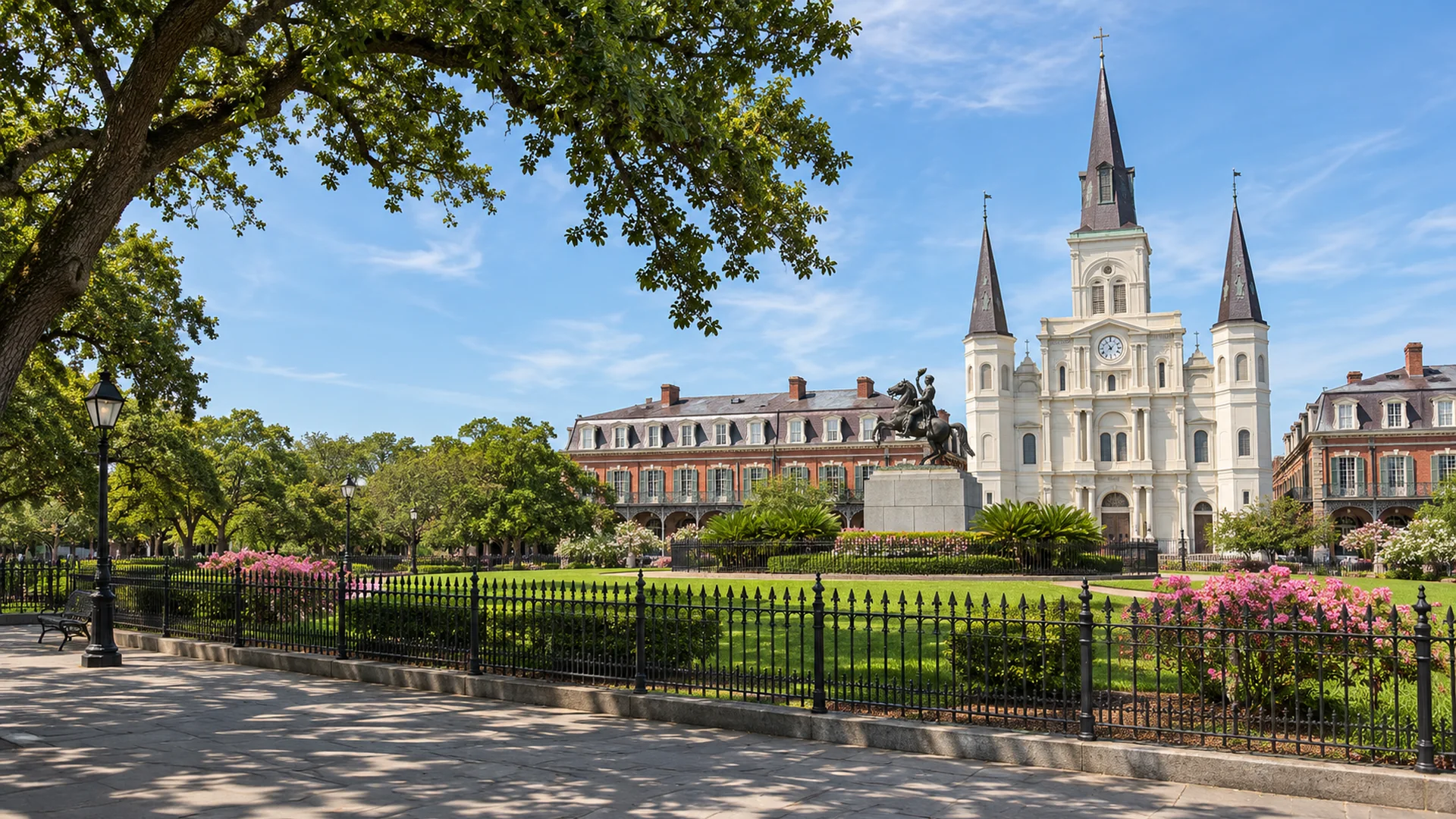
A city you hear, taste and remember.
Tours
Available every day
Starting from 337.50 USD for 2 adults

Tours
Available every day
Starting from 189.00 USD for 2 adults

Tours
Available every day
Starting from 189.00 USD for 2 adults


Activities
Available every day
Starting from 32.74 USD per person


Activities
Available every day
Starting from 30.38 USD per person
No services match your search.
The OpenTours city guide
New Orleans has a rhythm that invites you to slow down: music from a doorway, conversation over a long meal, the details of an iron balcony above the street. The French Quarter is a natural beginning, but the city becomes richer when you explore beyond it. Make room for neighborhoods, history and the river, and choose a few experiences that let you listen as well as look around each day.
Begin with a walk that connects the French Quarter's streets and public spaces, then return at another time of day to notice how the atmosphere changes. A first visit benefits from more than one neighborhood: the architecture of the Garden District or a music-focused evening around the Marigny can add another perspective. Choose your evening venues deliberately rather than assuming that every street offers the same experience.
Food is an essential part of the visit, but there is no need to turn each meal into a checklist. Leave room for a leisurely lunch, a café break or a dish that catches your interest. A museum or historical walk can provide context before an evening of live music. Balance these plans with pauses, particularly when heat and humidity make a tightly packed outdoor schedule less appealing.
Behind the landmarks
New Orleans was founded in 1718 within French Louisiana. Spanish rule followed during the colonial period, and the Louisiana Purchase brought the territory into the United States in 1803. The city's development reflects European, African and Caribbean influences, including the profound effects of slavery. Understanding those histories gives depth to the architecture, food and cultural traditions encountered during a visit.
Jazz emerged from a complex musical environment, with African American communities central to its development and many local traditions contributing to its sound. The National Park Service emphasizes the exchanges between communities rather than a single simple origin story. Listening in New Orleans becomes more meaningful with that context: music is part of the city's social history and a living practice, not merely a background to sightseeing.
Historical sources: National Park Service: Jazz origins in New Orleans New Orleans & Company: History of New Orleans
Start exploring
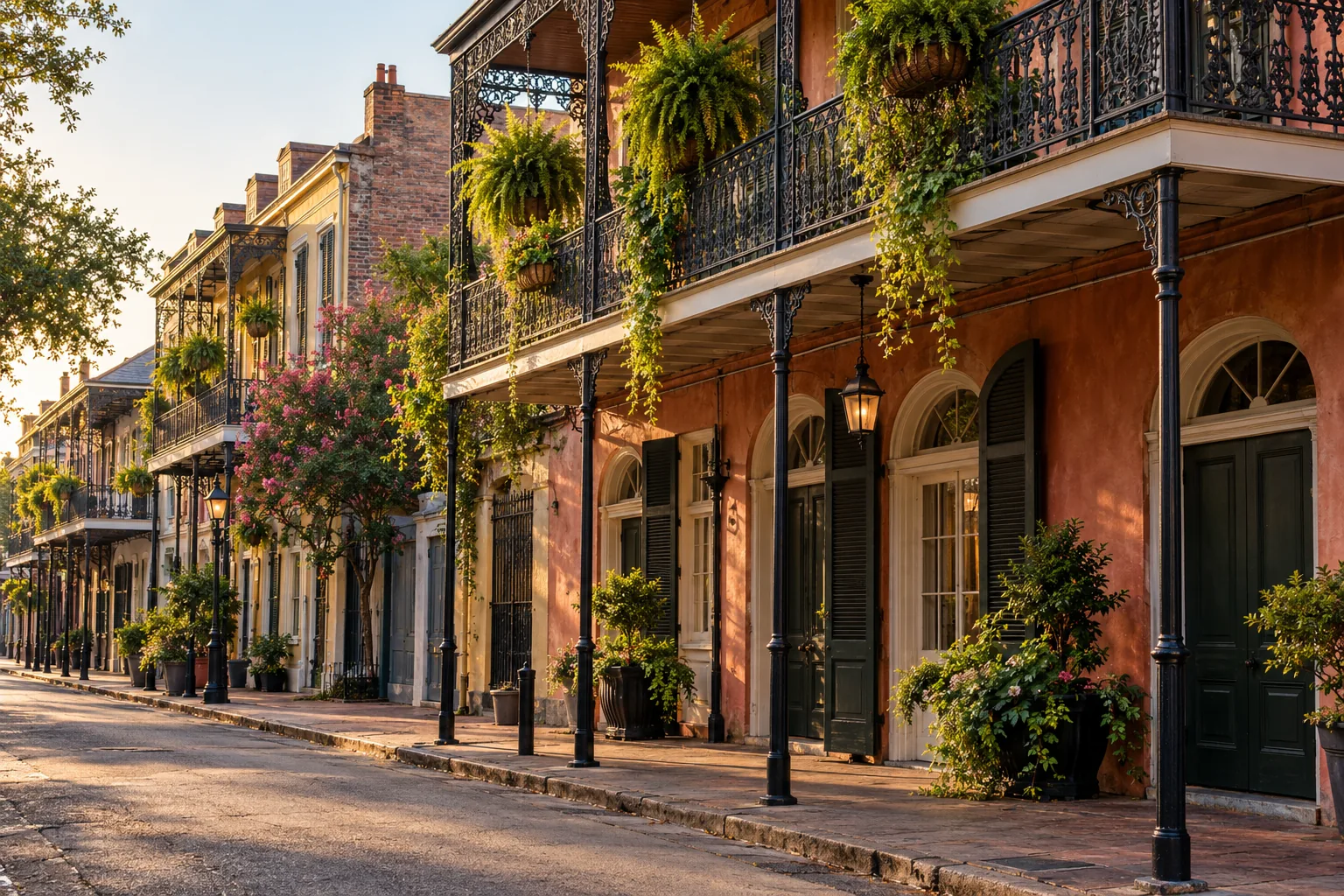
Look beyond the busiest blocks to appreciate courtyards, balconies and the pattern of the streets. Combine a walk with historical interpretation or a museum visit, and respect the homes and businesses behind the familiar façades.
Use the square and nearby riverfront to orient yourself within the historic center. Pause for the relationship between city and water before continuing through the surrounding streets, rather than moving directly to the next landmark.
Choose a performance for the music you want to hear, checking the venue's program and entry arrangements. Give the musicians your attention; a planned evening can offer a much richer experience than passing between several crowded rooms.
Set aside time for architecture and a change of neighborhood atmosphere. A guided explanation may add historical context, while an independent walk allows you to linger. Stay on public routes and respect residential privacy.
A closer look
The city's best-known historic area rewards more than one visit. Explore at a pace that allows you to notice buildings and public spaces as well as restaurants and entertainment.
Consider this area for a music-focused evening and distinctive streets. Select a venue that suits your group and plan the journey back to your accommodation before heading out.
A useful contrast to the French Quarter, with a different residential setting. Connect your walk with a nearby meal or café stop rather than rushing across town for a brief photograph.
Before you go
Our planning suggestion: allow three to four full days for several neighborhoods, historical context and time for music without scheduling every evening tightly.
Travelers interested in music, food, architecture and cultural history, especially those who enjoy a slower rhythm between planned visits.
Combine walking within an area with public transport or arranged rides between neighborhoods. Check current routes and the location of your evening plans.
Account for heat and humidity when choosing walking times. Check the forecast and local event calendar; major celebrations can change the pace and logistics of a visit.
Good to know
We suggest three to four full days for a first visit with music, food and time beyond the French Quarter. Keep some evenings open and avoid filling the following mornings so tightly that the trip becomes a sequence of rushed starts.
It is a good starting point, but adding another neighborhood gives a broader impression of the city. Choose according to your interests: architecture, music or a particular museum. A focused visit to one additional area is more useful than several hurried detours.
No. Architecture, history, museums, food and the river can form a rewarding daytime itinerary. Music experiences also vary widely. Choose activities and venues for your group rather than assuming the city has only one atmosphere.
Only when the selected product explicitly includes them. A neighborhood or city tour does not automatically include a performance, meal or venue admission. Check the itinerary, language, meeting arrangements and exact inclusions on the service page before booking.
Official destination and cultural resources used for this guide. Travel suggestions reflect an editorial itinerary; check operators for current schedules and booking details.
Last updated .
Keep discovering